
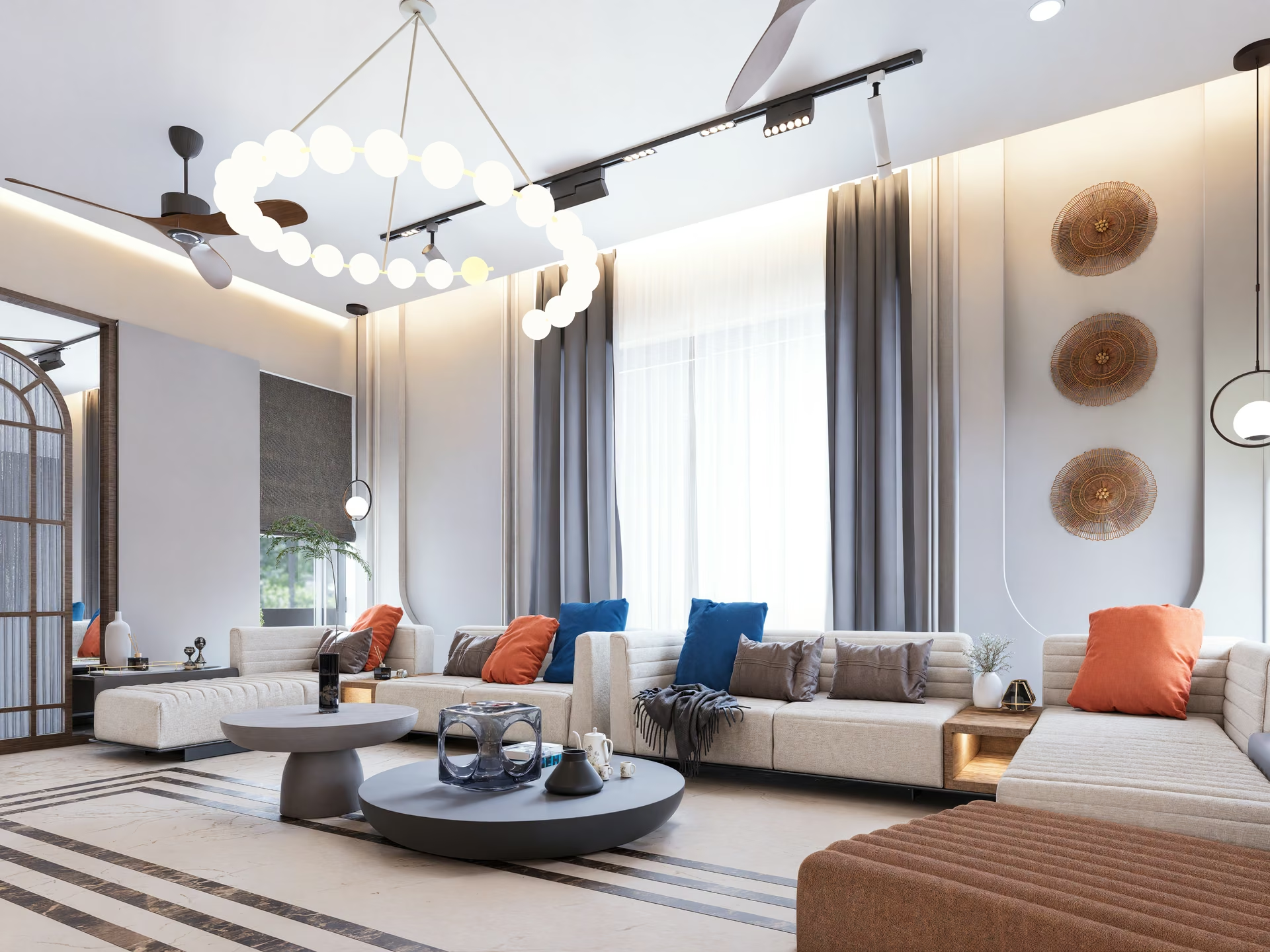
Dubai is hard on materials. Strong sun, summer heat, humidity near the coast, fine dust and air conditioning running most of the year all affect how floors, furniture and finishes age. A material that looks perfect in a showroom can fade, warp or stain within a couple of years here.
Here is what to think about when choosing materials for a Dubai home, from the studio that designs and makes them.
Quick answer
In Dubai, choose materials for sun, heat, humidity and dust: porcelain tiles for busy floors, sealed marble only where it gets care, engineered boards and veneers for large joinery, well-finished solid wood for character pieces, fade-resistant or performance fabrics for sunny rooms, and powder-coated aluminium, teak and light-coloured pavers outdoors.
Key facts
- Summer daytime highs in Dubai average around 40°C from June to August. (UAE National Center of Meteorology normals, via Climate of Dubai)
- The UV index regularly reaches 11 or higher (extreme) from about April to September. (Climate of Dubai)
- During humid summer spells, relative humidity can reach 80 to 95%. (Gulf News, quoting the National Center of Meteorology)
- Forklyft Studio's bespoke furniture is made in-house, typically in 4 to 8 weeks from design approval. (Forklyft Studio)
What Dubai's climate does to materials
- Sun (UV light): with the UV index at extreme levels for much of the year, fabrics, timber and some paints fade fast, especially near large windows.
- Heat: summer highs around 40°C make some materials expand, soften or crack, especially outdoors.
- Humidity: high near the coast and on summer nights. It makes solid wood move and encourages mould in poorly ventilated spaces.
- Air conditioning: keeps indoor air dry. The swing between humid outdoor air and dry indoor air stresses natural materials.
- Dust and sand: scratch soft surfaces and settle into heavily textured finishes.
Wood and joinery
Wood brings warmth, and it is the heart of most bespoke furniture. The key is choosing the right type for each job and finishing it properly.
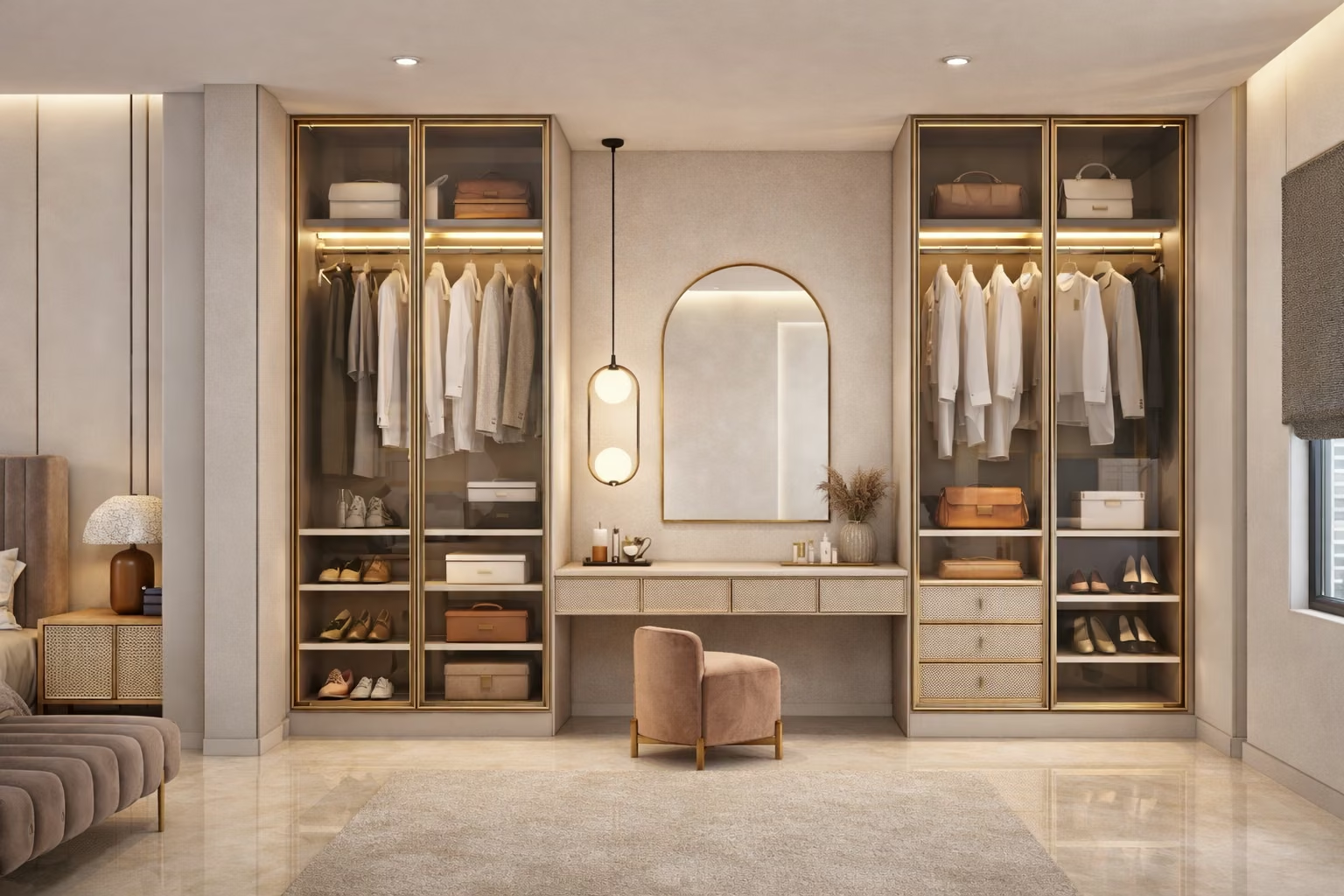
- Solid wood is strong and long-lasting, but it moves with humidity. Good joinery allows for that movement and uses a quality sealed finish.
- Engineered boards and veneers (a thin layer of real wood on a stable core) move far less and are often the better choice for large panels, wardrobes and kitchen doors.
- Sealed edges matter. Unsealed edges are where moisture gets in.
Our bespoke furniture and joinery is made in-house, with the material for each piece chosen for the room it will live in.
Stone and flooring
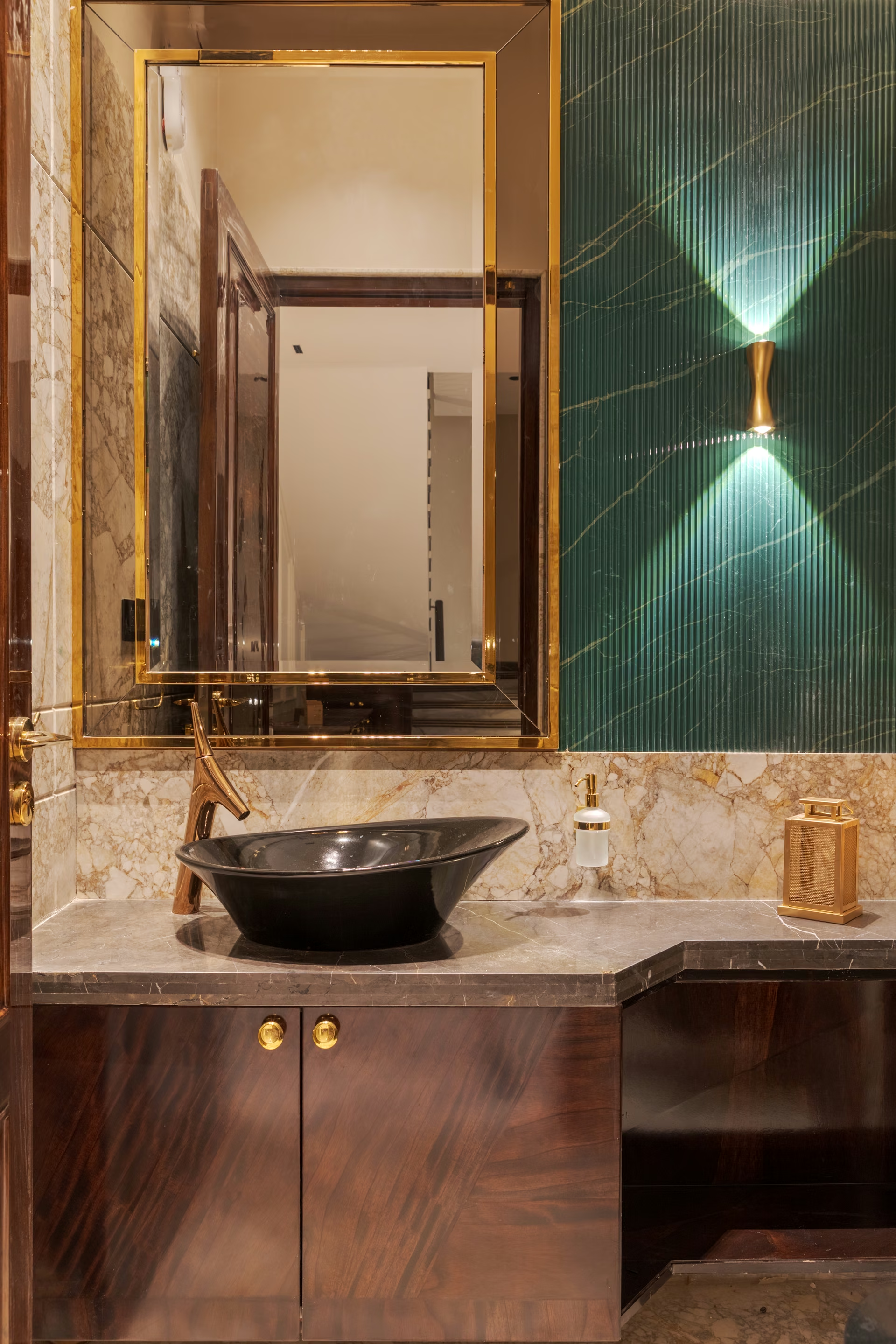
- Porcelain tiles are hard-wearing, easy to clean and handle heat and sand well, which is why they are so common in Dubai homes.
- Natural marble is beautiful but softer and more porous. It needs sealing and care, and acidic spills like lemon or vinegar can etch it.
- Engineered wood flooring gives the look of timber with better stability than solid planks in air-conditioned rooms.
Choosing materials for your home? Book a free consultation or message us on WhatsApp. One team designs, builds and furnishes it.
Fabrics and upholstery
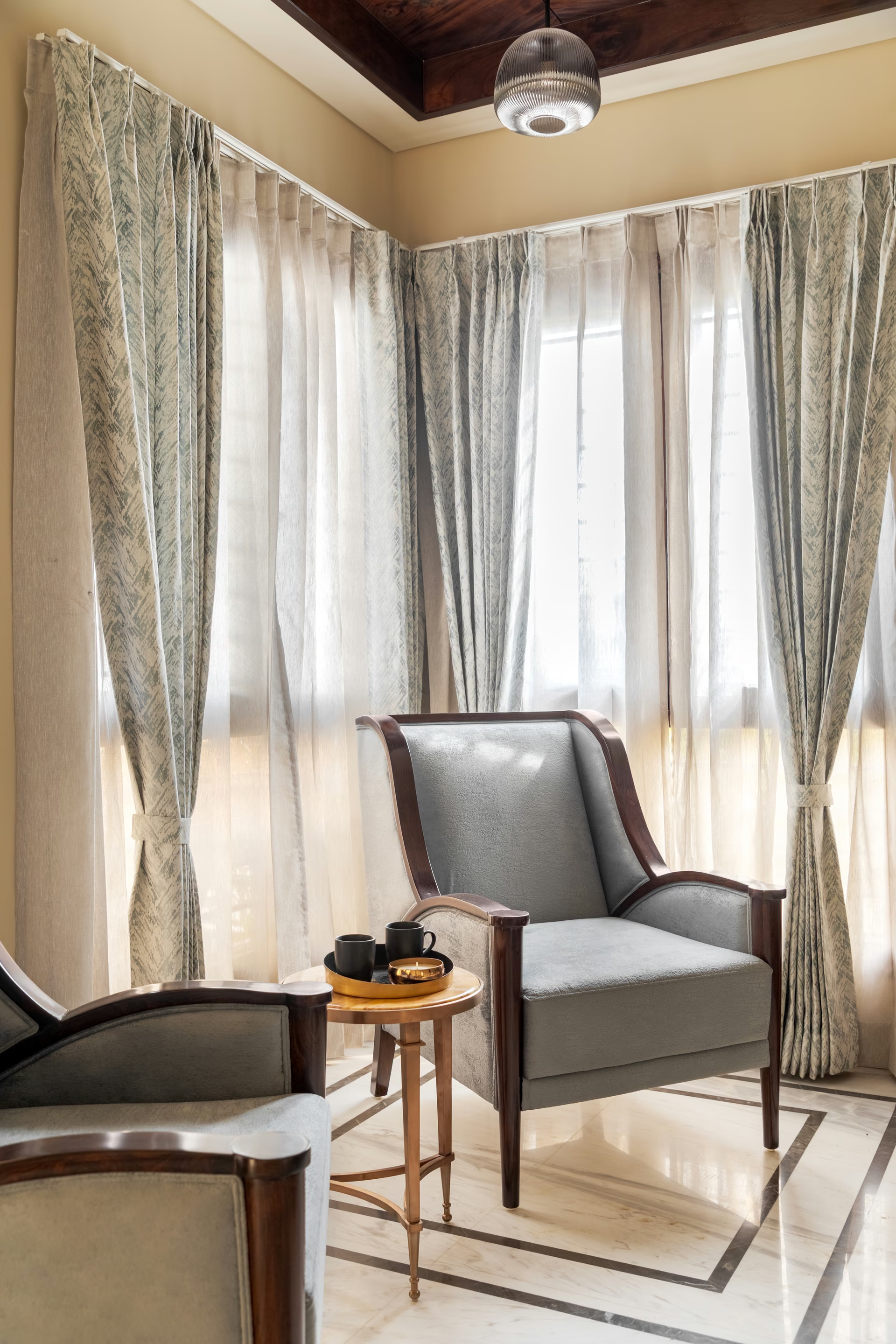
- Choose fade-resistant fabrics for sunny rooms, or protect them with sheers and UV window film.
- Performance fabrics resist stains and are easier to clean, which helps with dust.
- Natural linen feels cool and relaxed, but creases and fades more easily, so use it where the sun is softer.
Outdoor living
Outdoor spaces work hardest of all. For terraces, pool decks and gardens:
- Use materials made for outdoor use: powder-coated aluminium, teak, outdoor-grade fabrics and porcelain pavers.
- Avoid dark surfaces that get too hot to touch in summer.
- Plan shade from the start. Pergolas, canopies and planting make outdoor spaces usable for more of the year.
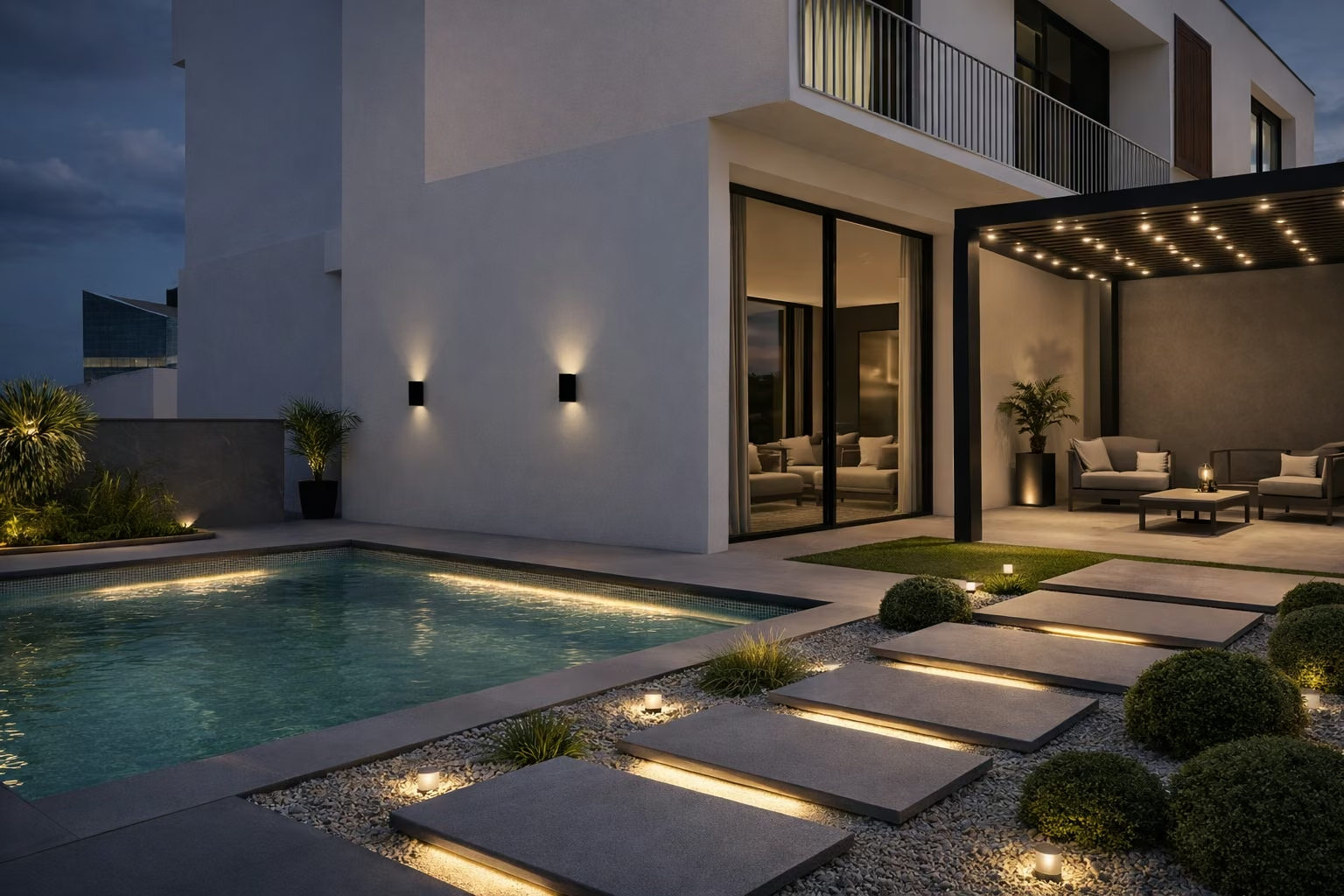
See our landscape and outdoor design service for pool decks, shaded lounges and gardens.
Coastal homes
Homes on the water, such as villas on Palm Jumeirah or in District One, face salt air and higher humidity. Metal fittings, hinges and outdoor furniture need to be corrosion-resistant, and good ventilation becomes even more important.
Paint and wall finishes
- Use good-quality, washable paints in busy areas such as hallways and children's rooms.
- Choose moisture-resistant finishes in bathrooms and kitchens.
- Exterior paint should be made for high UV and heat.
Quick cheat sheet
- Busy floors: porcelain tiles
- Statement floors and counters: marble, sealed and cared for
- Large joinery panels: engineered boards and veneers
- Furniture with character: well-finished solid wood
- Sunny rooms: fade-resistant or performance fabrics
- Outdoors: powder-coated aluminium, teak, outdoor fabrics, light-coloured pavers
The simple rule: choose materials for how and where they will be used, not only for how they look on day one. The most beautiful room is the one that still looks right after five summers.
Sources
- Climate of Dubai (UAE National Center of Meteorology climate normals)
- UAE National Center of Meteorology
- Gulf News: why UAE summers get so hot and humid
Rules and procedures in Dubai change. This guide reflects our understanding as of 15 November 2026; always confirm current requirements with your landlord and the relevant authority.
Your Project
Planning a project in Dubai? Book a consultation or message us on WhatsApp and tell us about your space.